AS THE DEN BURNS
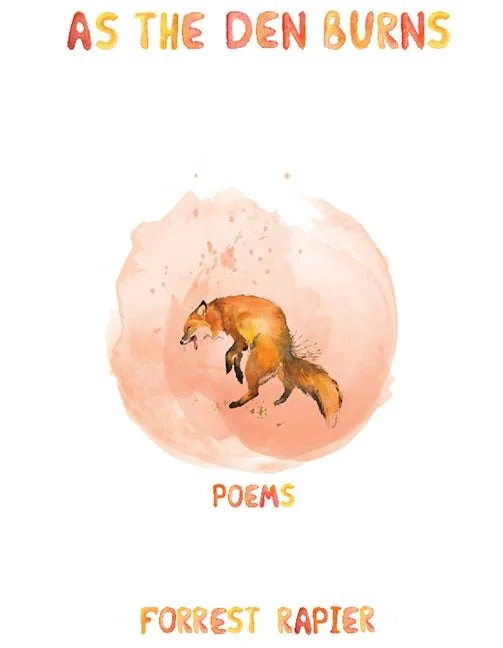
In this scorching debut, Forrest Rapier creates soundscapes lush as Florida. “The word,” he writes, “is much like the land,” and these poems are lit with trouble: a shapeshifting father whose absence imbues every line, a rowdy cast of characters with “wild chickens for brains,” and a luminous “I” at the center, one of the ‘lightning-struck lost boys’ on the Florida coast, ‘keeping watch’ and working to “keep the love door ajar.” The fire burns bright in these poems, but we feel—by the end of the book—that the light by which Rapier works and keeps watch comes from him.
—Ryan Vine, author of WARD and To Keep Him Hidden
Part personal mythology, part fever dream on the Florida coast, As the Den Burns introduces a poet with an unmistakable, razor-sharp voice that gets under your skin. Witty, sonic, and place-haunted, these poems have the narrative acuity of Frank Stanford and the fierce imagination of a visual artist steeped in a Bosch-like obsessiveness. Forrest Rapier’s poetry is reckless yet accurate, immediate yet historical, cursed yet brimming. The world is on fire in these poems and Rapier is our guide through the rubble, begging us: "Save what you can."
—Nicole Stockburger, author of Nowhere Beulah
As the Den Burns thickens and teems with the hardscrabble lives of its Gulf Coast inhabitants. Violence and tenderness, filial piety and escape, disasters and the wild, dangerous beauty of the natural world all appear in Forrest Rapier’s stunning heatwave of a debut collection. "Everything here/is feeding off something else," he writes, "Some beasts never evolve."
—Leona Sevick, author of Lion Brothers
Forrest Rapier's As the Den Burns is haunted by its own beloved dead. It is haunted by human stories—funny, tragic, and tender—and how the words we use to tell those stories ravish and beguile. . . . As the Den Burns is a deeply intimate, exuberant history that marries the origins of language and pain and magic and admonishes both the wild, seeking speaker and the reader to “Unbury your family plainsongs from the grave deep / inside your throat.”
—North Carolina Literary Review
ZEITGEIST CHA CHA
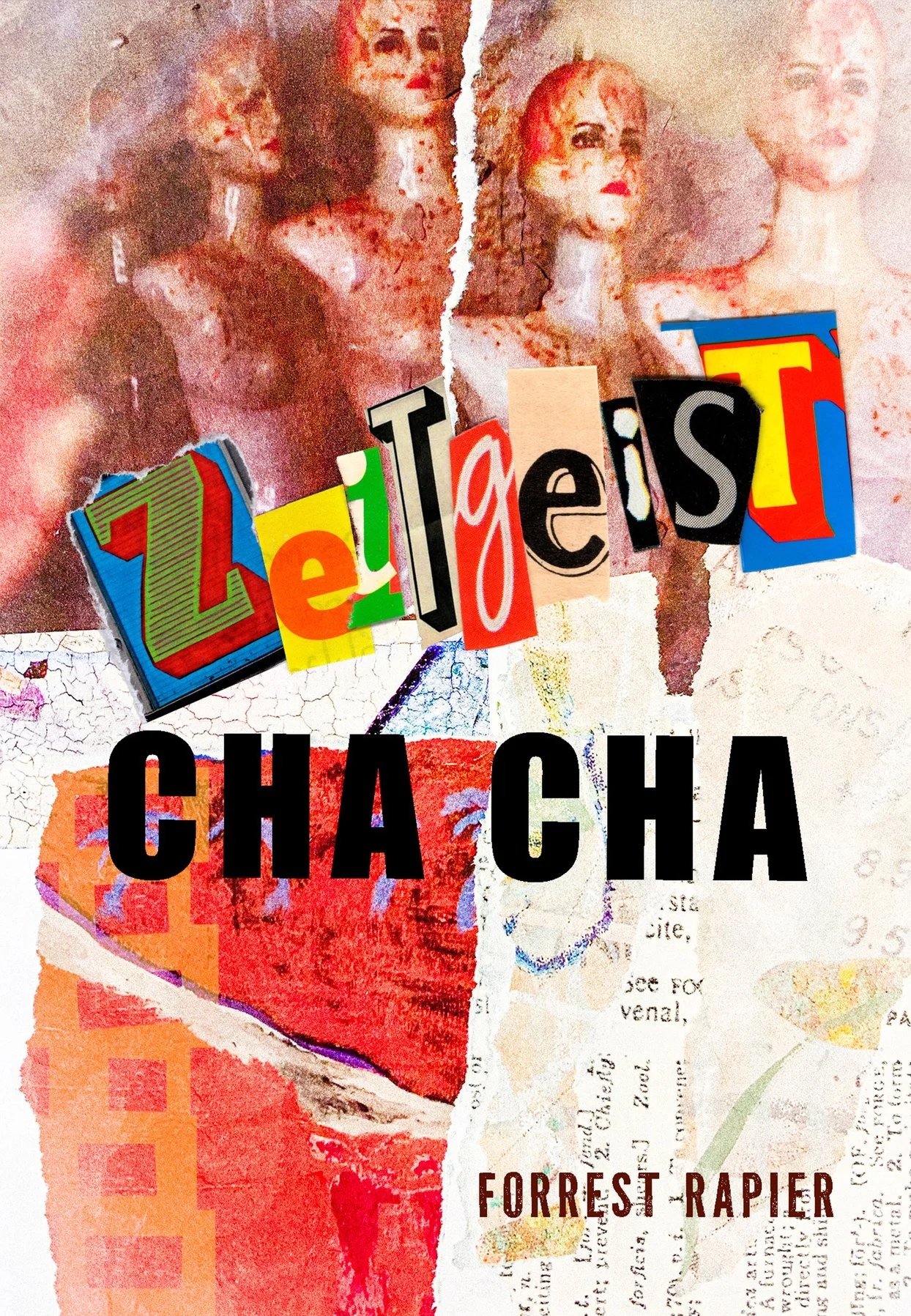
In Zeitgeist Cha Cha, we vault from the brink of a waterfall to a whispered conversation in a bedroom, from a torn-down Funhouse to a Museum where all of the paintings have burned. Irreversible damage becomes whimsical in these poems. Everything is on the verge of disintegrating. What is supposed to last, melts; and what melts is what’s supposed to last. At the heart of this collection is a tournament-style sequence of heartbreaker couplets asking whether love is constantly en vogue or if it has already passed its prime. Is the Museum a good place for a date or is it a culture crypt? The houses keep changing from Fun to Haunted to Bouncy. These poems point toward what constantly evades us: nuance and novelty, newfound flirtation, and sincerity. Romance and whimsy become survival tactics in this collection.
To Purchase
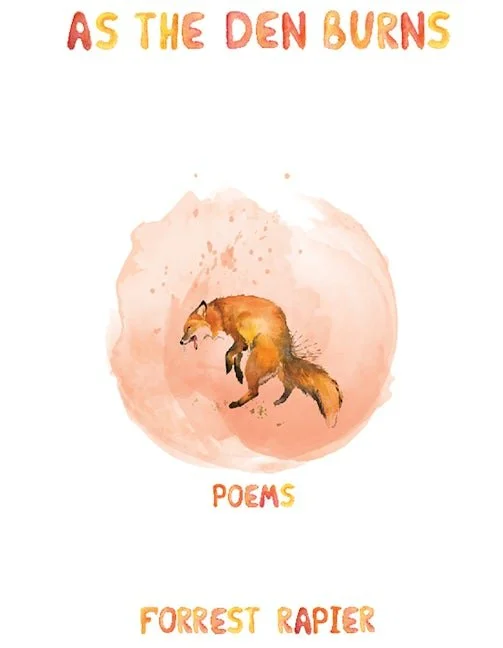
As the Den Burns is a debut collection that renders a sublime world on the verge of vanishing. Elegiac and surreal, primal and lyrical, these unpredictable poems vault from Tallahassee vigils to flooded gardens after a hurricane’s landfall. Reading this collection is like swimming into the ocean; you float weightless amid waves of resistance, then knots form in your gut because something unseen moves beneath you. Mythology and song collide in this stunning collection as unruly poems waver from lifeguard chairs and cathedrals to lamps in underwater caverns. Rapier’s poetry could be spray painted beneath a beach pier; every stanza shifts rapidly without apology, the shape of the words like a signature.
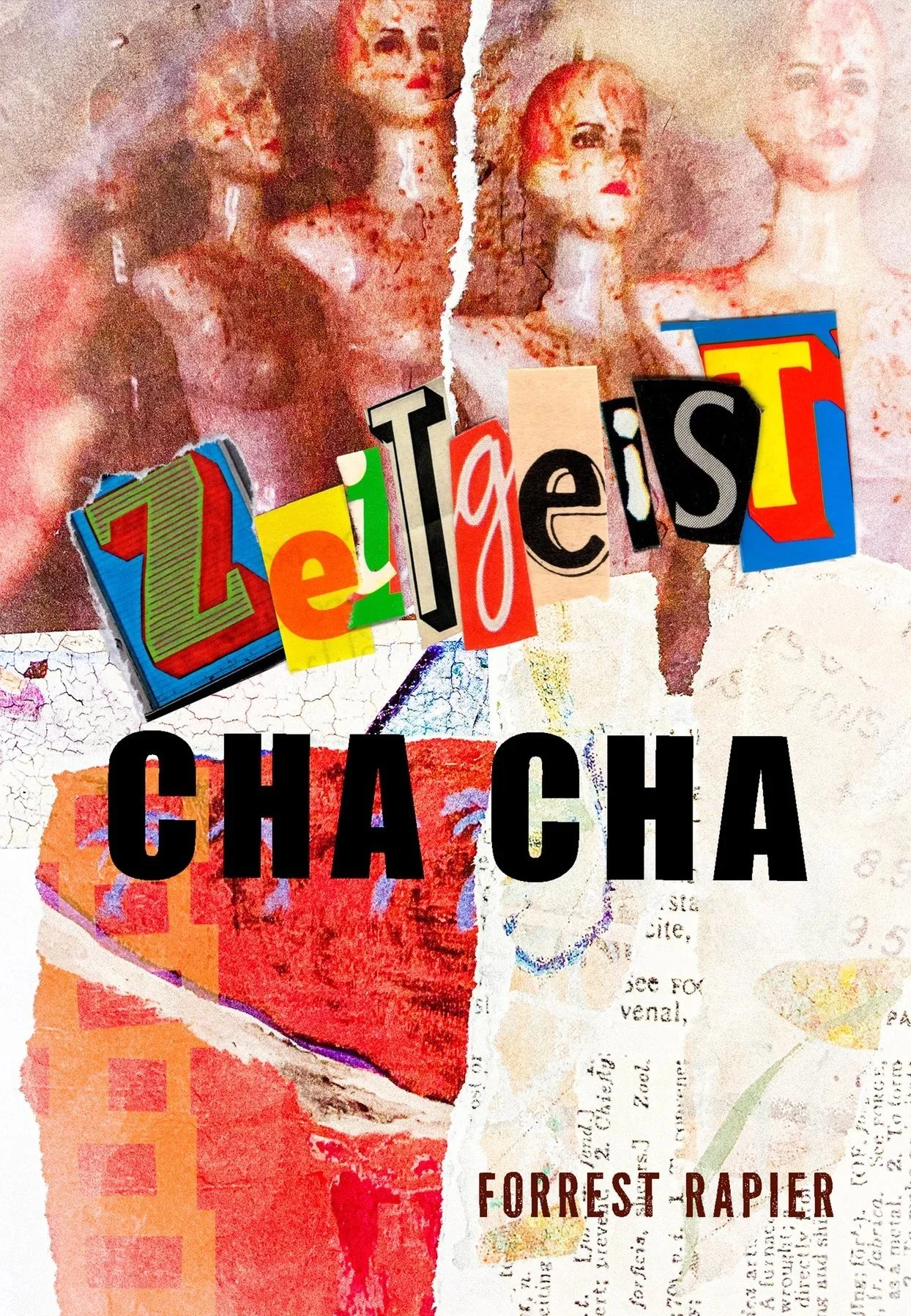
In Zeitgeist Cha Cha, we vault from the brink of a waterfall to a whispered conversation in a bedroom, from a torn-down Funhouse to a Museum where all of the paintings have burned. Irreversible damage becomes whimsical in these poems. Everything is on the verge of disintegrating. What is supposed to last, melts; and what melts is what’s supposed to last. At the heart of this collection is a tournament-style sequence of heartbreaker couplets asking whether love is constantly en vogue or if it has already passed its prime. Is the Museum a good place for a date or is it a culture crypt? The houses keep changing from Fun to Haunted to Bouncy. These poems point toward what constantly evades us: nuance and novelty, newfound flirtation, and sincerity. Romance and whimsy become survival tactics in this collection.